Our Technology
BCS Classes and solubility
The BCS Class has a profound effect on the approaches that are taken to formulation. It is easy to forget that the bioavailability of active compounds dosed orally can depend on their solubility, how they move in the intestine, how they interact with the intestine wall (lumen), and whether their transport is paracellular or transcellular.
Gelteq® Technology
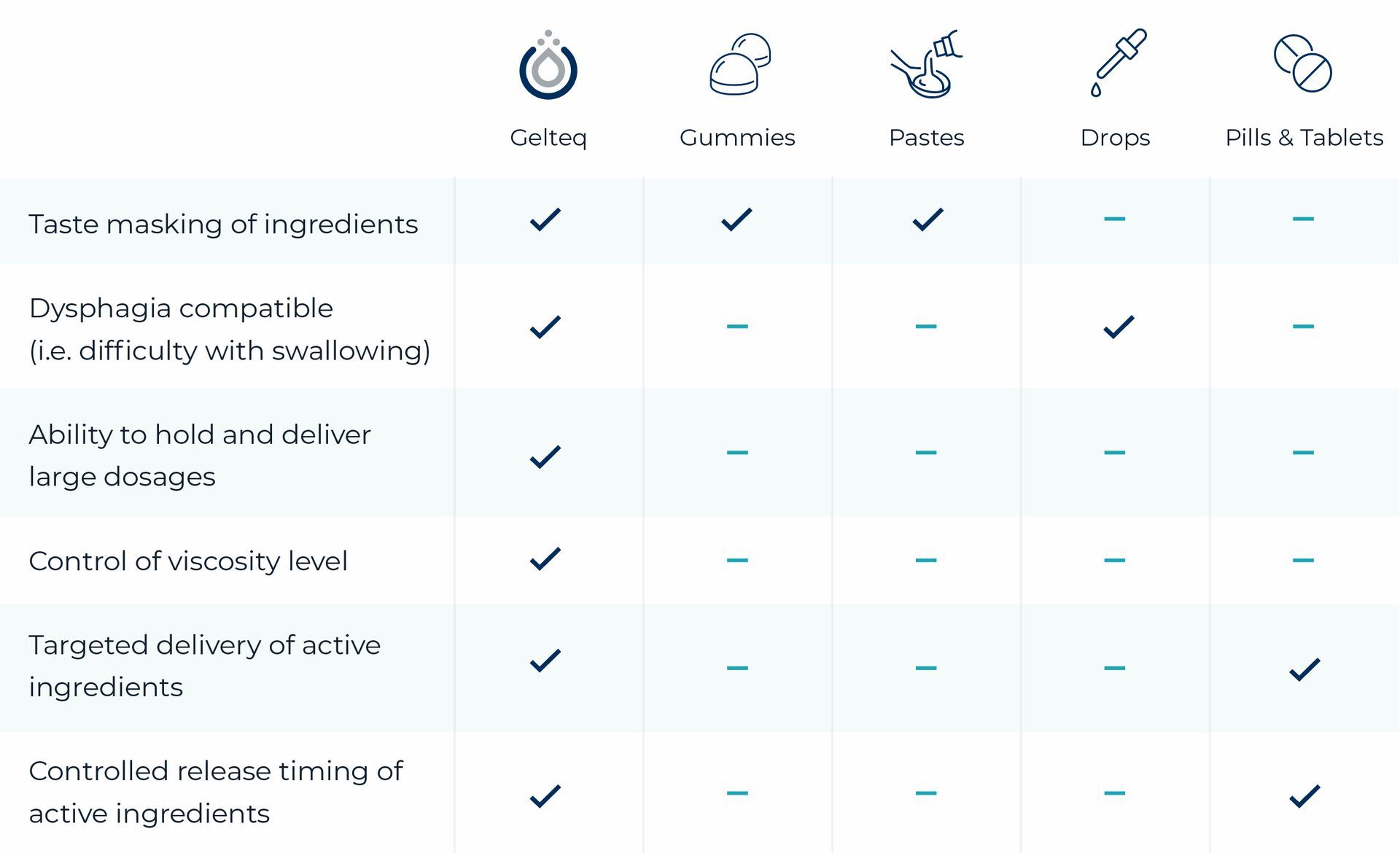
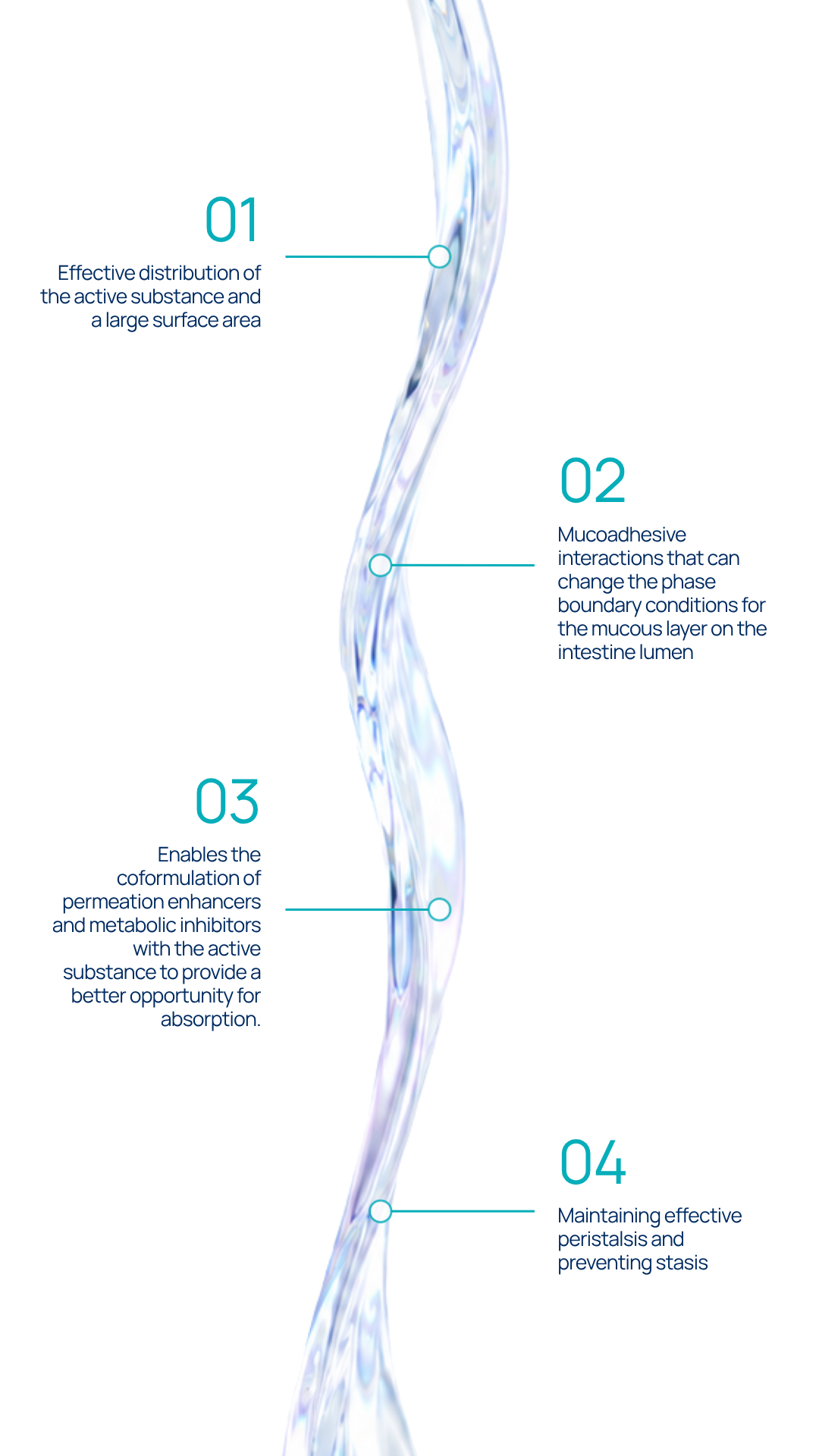
does not seek to change the nature of the active substance and does not alter the mechanism of absorption. The gel-based approach allows formulation approaches that can bring together factors that can influence successful absorption.

Gelteq® Technology Trial Data: Greater Absorption
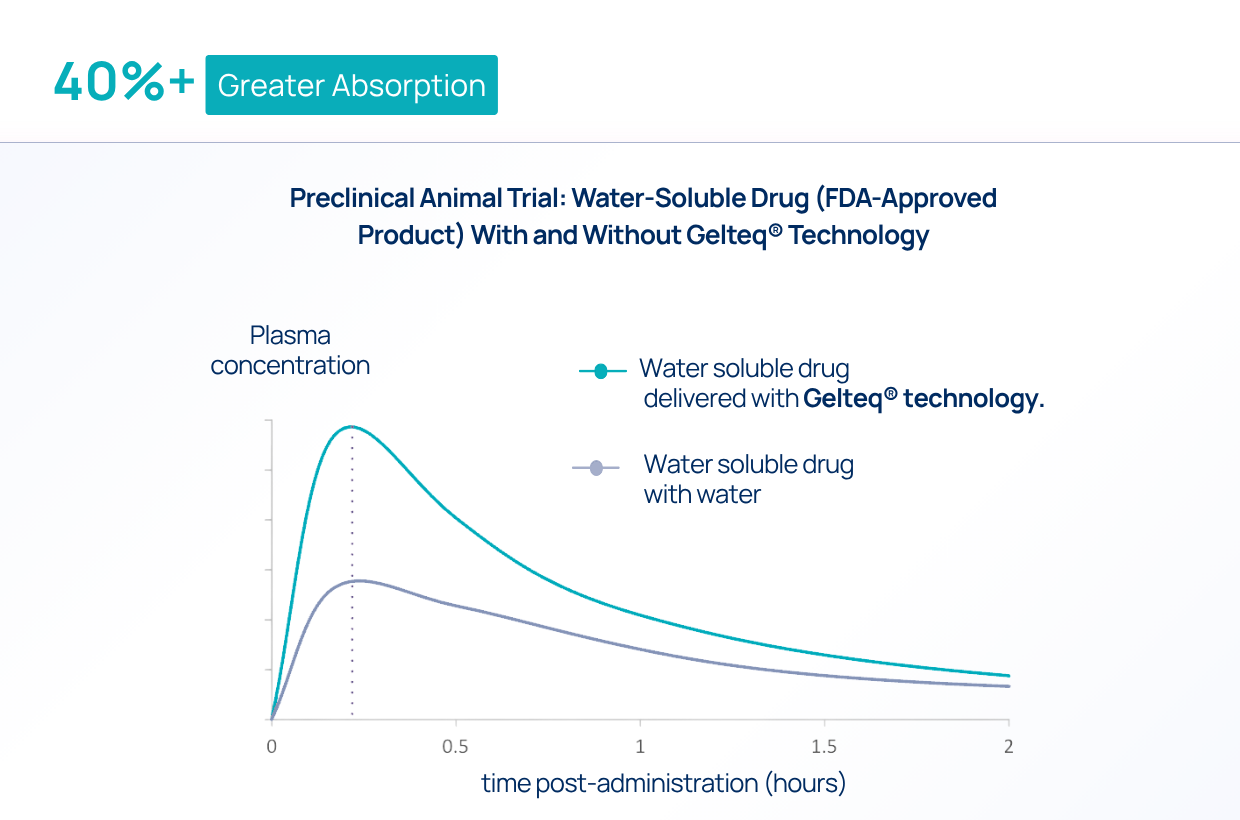
Over 40% improvement in bioavailability with water soluble compounds delivered with Gelteq® technology.
Trial results showed Gelteq® technology for water soluble compounds was able to:
→ Improve bioavailability (overall absorption) by over 40%.
→ Provide faster absorption of an API.
→ Increase peak concentrations.
Gelteq® Technology Trial Data: Faster Absorption

Over 300% faster absorption of oil-soluble compounds delivered with Gelteq® technology.
Trial results showed Gelteq® technology for oil soluble compounds was able to:
→ Promote 300% faster absorption of an API in the first hour.
→ Improve overall bioavailability of an API.
→ Increase peak plasma concentrations.
Gelteq® Technology Trial Data: Bioequivalence

Gelteq® technology enables effective dispersion and distribution of the drug. The approach can be bioequivalent to other formulations and provide a pathway to advance products through pathways like the FDA's 505(b)2 pathway.
Trial results showed Gelteq® technology for a large dose BCS Class III compounds was able to:
→ Show bioequivalence.
→ Achieve similar Tmax and Cmax
→ Not impact clearance.
Gelteq Technology for Veterinary Application
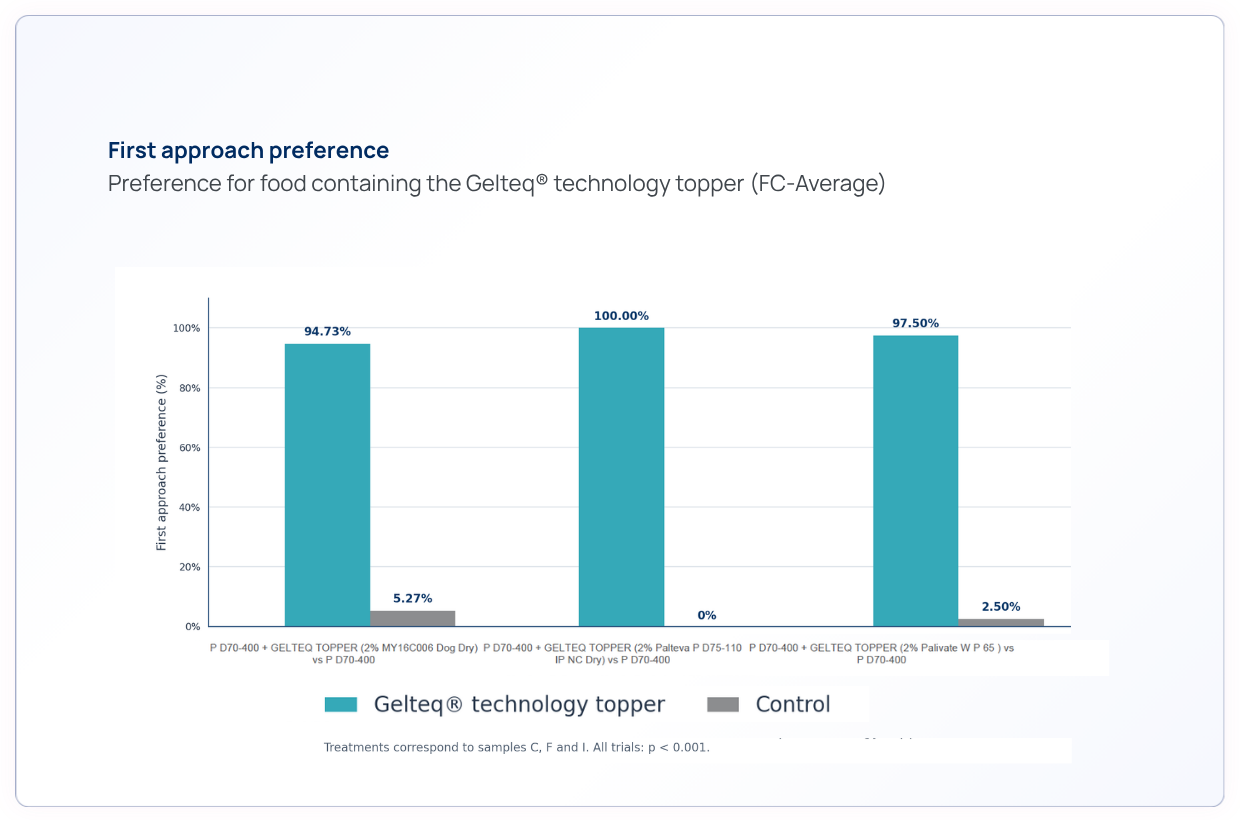
Gelteq® technology is suitable for veterinary applications, addressing palatability and administration challenges across companion and large animals.
A daily oral medication or supplement for companion and working animals can be difficult to build into a daily routine. Unlike dosing human medication, an animal cannot understand that the dose is supporting their wellbeing and veterinary medication adherence can become a stressful scheduling issue for the animal’s carer.